Showing posts with label reading. Show all posts

Monday, November 21, 2022

How do I entice thee to read, let me count the ways

 Whenever possible, I pack as much reading into my daily lessons as possible. This requires me to find different ways to present the readings, ways that entice the students to read a text and to understand what they are reading and not simply seeing the words on a document without attaching meaning.

Would you believe that students actually LIKE reading, in a second language, when you offer them different ways to read or different tasks that can only be completed successfully if they read the text? It's true, although you may drain your brain thinking of authentic, varied ways of doing this.

I use the Storybuilders from the Comprehensible Classroom in various ways with my students. I like adding the Storybuilders to my lessons because, first of all, the stories are interesting, unrealistically fun, and totally unpredictable. That alone creates interest for the students. Secondly, the students ARE READING!!!

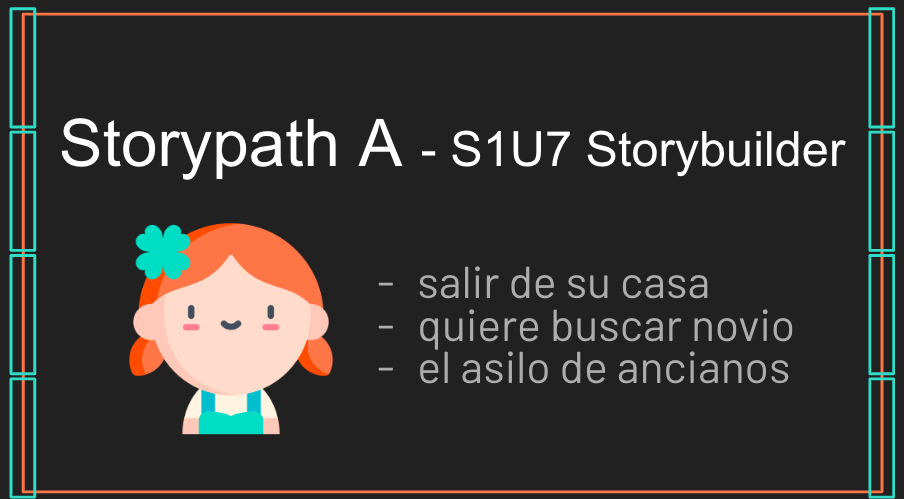
Last school year I tried a new game with the students that was linked to the Storybuilder the Comprehensible Classroom from SOMOS 1 Unit 7, Canela y su abuela. The object is for students to read the story, following the story path that I have chosen, and then work together to answer questions about the story.

These are the steps:

1. Give your students access to the storybuilder. I link it to the class Schoology page so they can read it, but not make any changes to the google slide presentation.

2. Give students the Story Path that they need to follow. (If you're unfamiliar with Storybuilders, they are similar to choose your own adventure books. The students read the story and after a few slides they are presented with a choice. They continue to read and make choices to which direction the story goes until it comes to a logical, or illogical, end. Then the slide returns them to the beginning of the story and they create a new story by making different choices throughout the story.)

3. Put students in groups of 3 or 4 and have them read the story following the story path that you have designated.

4. After reading, students close their computer. Each student needs a mini-whiteboard, a marker, and an eraser.

5. Project the first question on the board that relates to the story and story path they just read. The students quietly discuss the answer in their groups and then EACH STUDENT has to write the answer on their mini-whiteboard. It is NOT a race, but rather you want the students to take the time to write their answer and check the answers of the other members of their group.

6. Students hold up their mini-whiteboards. Project the slide with the answer. The group earns 1 point if each member of their group answered the question correctly.

I mix up the questions so there are cierto/falso questions, short answer questions, translations, and fill in the blanks.

These are a few of the benefits of this activity:


Click on the link to see/access my google slide presentation for this Storybuilder. 

Please note: I have expressed written consent from Martina Bex at the Comprehensible Classroom to share this activity with information related to the story from the Storybuilder.


Sunday, May 8, 2022

Scavenger Hunt - Get students up and moving!


May seemed like the perfect month to create an activity for my students that would require them to get up and moving in order to read and answer questions. I wrote a basic story, Marcos se quejó mucho and then created the scavenger hunt based on the story. 

The overarching purpose was to familiarize the students with the verb QUEJARSE before watching the Sr. Wooly video, La Dentista. The previous day I had used PQA (personalized questions and answers) based  on what students, teachers, and others complain about and then asked students if they complained about various things the previous day. That class conversation paved the way for this activity.

The story is about a boy that goes to school on Friday and complained about quizzes, a teacher not being in the room to get help, an overdue library fine, and other reasons. Each place that Marcos went in the story and complained are the locations that I posted questions that students had to answer. Some questions were directly related to the story and others could be answered without the story.

Below are the instructions I handed out to the students.


Scavenger hunt

Goal:

a. to answer the 8 questions correctly in order to...

b. ...get the words for the secret questions, and

c. to unscramble the words to make a question


It should take you 15 minutes or less to find the 8 questions throughout the school, answer the questions, and return to the room to get the last WORD for the question.


1. Read the story Marcos se quejó mucho. (The locations that Marcos goes to in the story is where you will find the questions!)


He complains about 8 different things in the school. In order to know where to find the 8 posted questions, read the story and go to the 8 different places mentioned in the story.


2. Answer the questions posted throughout the school. Write the words that are written in CAPITAL LETTERS after the correct answer to the question. (Remember: you need to answer the questions correctly in order to have the correct 8 words/phrases to unscramble and form a question!)


3. After you have the 8 different words/phrases, return to Profe Hitz's class to get the 9th word.


4. With your partner/group, unscramble the question and hand it to Profe Hitz.


The two screenshots below are from the activity. The first one has a question NOT based directly on the story. The second screenshot is a question based directly on the story about Marcos.

One of the questions NOT directly based on the story


Ideas to make this activity run smoothly:

1. Tell the students the expectations for their behavior in the hall. Email your colleagues and let them know your students will be in the halls and at what time they will be moving throughout the school.

2. Before class, I highlighted one of the 8 places on 8 different papers so students didn't all have the same starting point.

3. I put students in pairs or groups of 3.

4. I distributed the paper to group 1, which had "biblioteca" highlighted because it is the first location that Marcos visits. I told them to leave the classroom and go to the location highlighted on the paper and then continue with the story in that order.

I gave group 2 their paper, with "la clase de Inglés" highlighted and told them to start there.

For my class of 29, after I had given papers to the first 8 groups, I then gave group 9 a paper that started them at the library. It helped keep groups from all going to the same place to start. If I had extended the story to 2 or 3 more locations, that would have been even better!

5. I wrote the last word "PREFIERES" on the board after all groups had left my room. When they returned to my classroom, I directed them to look at the board and start unscrambling the words to make a question.


The story is pictured below. The directions and accompanying questions are  available HERE.  (Hopefully the link works for you!)


Wednesday, May 12, 2021

DECISIONES - A Strategic Game for the World Language Classroom


Here is an end of the school year, yes we made it through the crazy pandemic hybrid schedules game for you. It is a great way to review any type of text - a short story, legend, several chapters in a novel, news articles, - anything with enough text to be able to write 14 comprehension questions.

I test drove this new game with three classes and made changes after the first two classes to improve the game and rules. Now, it is ready for you.  

Students will like the game because they decide what they will do with the points they earn, but it is mixed with an element of uncertainty. You'll like it because the students want to answer correctly in order to have that control over their points. So here you go...

DECISIONES

Materials Needed: 

- Deck of Cards. I use Spanish cards, Baraja Española. They're authentic, the face cards have the number values written on them. If you use a regular deck, I suggest taking out the face cards so keep it simple.

- Mini-White Boards, Markers, Erasers, or something for students to write their team's answers

- 14 Decisiones Cards (5 Regalen, 5 Quédense, 3 Dupliquen, and 1 Regalen los puntos negativos)

- 14 Questions for the game based on a text you have read with your students

Goal of the Game: Earn more points than the other teams

Instructions/Rules:

1. Put the students into three groups. If you have large classes, you can have 4 or 5 teams, but it will take longer to complete the game.  

2. Students need to sit with their teams to be able to discuss the answers to the questions. Give each group a set of the DECISIONES cards - 14 cards per set. Each team also should have 1 mini-white board, a marker, and eraser

*I copied each set in a different color to make it easier to keep track of the cards each team has used.

3. Read the first question. Team members will quietly discuss the answer and one team member will write the answer on the mini-white board. This is NOT a race. Allow sufficient time for students to discuss and write their answer.

4. Tell teams to hold up their answers. Teams that answer correctly will have the chance to earn points or to gift points. Teams that answer correctly will lose a DECISIONES card.

When Teams Answer Correctly:

5. If several or all teams answer correctly, start with the first team and pull a card from the top of the deck. Students look at the number on the card and decide which of the following actions they want to do:

- Quédense con los puntos - Keep the points, add it to their score

- Regalen los puntos - Gift the points to another team (They cannot gift it to their own team)

- Dupliquen los puntos - Duplicate the point value of the card, add it to their score

- Regalen los puntos negativos - The point value of the card is negative, gift it to another team to take aways points from that team's score

6. Keep track of each team's score and write it on the board on project the score so throughout the entire game, students can see the running scores for their team and other teams.

7. After the first team has decided what to do with the points, turn over a card for the net team that answered correctly. They decide what to do with their points. Continue until you have pulled a card for all teams that answered correctly .

If a Team Answers Incorrectly:

8. If a team answers incorrectly, they will lose cards. The first card they need to surrender to the teacher is the Quédense con los puntos card. If they answer incorrectly the second time, take away another Quédense card from the team. Continue taking away the Quédense cards until they do not have any more of those, then take away the Regalen los puntos negativos card, and then the Dupliquen cards.

The End of the Game:

9. The game ends AFTER students answer ALL of the 14 questions, and have no DECISIONES cards remaining.

A basic version of the DECISIONES cards are available HERE for download. It will ask you to make a copy.

Suggestions/Insights:

- The game works best when there are more than two teams playing. The reason for this is that when three teams play, and if one team starts to pull ahead, the other teams will most likely gift their points to the team with the lower points. This naturally helps to keep the scores close and teams won't give up and stop trying to win.

- Make the majority of the questions that students will know the answers. The best part of the game is students strategizing what to do with the points they are presented with. Throw in a few harder level questions to keep everyone on their toes and to encourage collaboration with their teammates.

- Students will quickly learn that they want to duplicate the cards with high numbers and gift the cards with the low numbers.

- If a team has used all of their cards and only have the Regalen los puntos cards remaining, you may want to add a rule that if they answer incorrectly, they lose X number of points. The reason I say that is because today one team had only Regalen los puntos cards remaining and I heard one of them say, "If we answer incorrectly, we don't have to give any points to other teams". Of course students will figure out every angle to their advantage. But, I'm telling YOU ABOUT IT, so you can add that extra rule to prevent that from happening. 

- When pulling a card off the top of the deck for the teams that answered correctly, I always started with the same team and went in the same order. It made it easy to follow the same order and NONE of the teams complained about it.

- Another plus to this game, you have to read a text with your students first! We all know the power of reading when helping your students to acquire another language!

Wednesday, October 28, 2020

Digitally Ordering Events

 Ordering events is a good way to have students REREAD a text. Before the pandemic, I used to print copies of text and my students ordered the events using the paper copies. For teaching during the pandemic, I digitized the activity on a Google Presentation and assigned it through Schoology.

The first ordering activity I made this fall on Google Slides was for Mira Canion's El escape Cubano. I learned a few ways to improve upon it which are reflected on the ordering activity for Mira Canion's Tumba novel.

1. Limit each slide to 4 events. More than increases the chances of students not getting the order correct.

2. Use at least two different colors for the text boxes. If you make this activity a graded assignment, it makes it much easier for you to know if the order is correct with a quick glance at each slide. (But don't have the same pattern on each slide or the students will catch onto that quickly.)


If you're interested in having a copy of the ordering activity on google slides for the first five chapters of Tumba, you can find them HERE. 


FYI: I checked with Mira Canion to get her written consent to post this. (It's a must to check with an author before posting materials you created related to the author's book!)


Thursday, October 15, 2020

Story Scripts & Preloading Vocabulary


I'm a few days away from starting the novel "El escape cubano" written by Mira Canion. In my classroom, it's all about front loading the vocabulary before opening the pages of a novel so students sail through the reading with ease, making the reading more enjoyable.

For several years I've been using the story "La novia se queda en el ascensor". This year, with the need to revamp the formats of my story scripts in order to make the material available to those four different groups that meet at the SAME TIME each day: (1) those that are in my class on A/B days, (2) those learning at home on A/B days, (3) the 100% synchronous students, and (4) for those students in the classroom every day. 

Here is an outline of how I presented the story and provided extension activities for the story "La novia se queda en el ascensor".

1. Using a document camera so students at home can see and projecting onto my board for students at school to see, students and I filled in the vocabulary sheet below. Students already KNOW most of the words. The new words are the ones I highlighted in yellow. This shows the students that they already know most of the word, plus they are introduced to the new ones in the upcoming story.

2. I told the story using illustrations on Google Slides for visual support for both students in class and at home.


3. After telling the story, we read the story script. (page one shown below)


4. Then I asked 10 True/False questions. They listened to the questions and to go over the questions I projected the questions on the board.

5. I projected six slides, (one is shown below), in which students read the sentences and had to say if the sentence described picture A, B, or X - neither A nor B.


6. I uploaded the student copy of the story. It included title page (where students wrote their names so in my google drive it was clear on page one who completed the work); slide 2 had the directions; slides 3-5 had the story (but it was a jpg image of the story so they couldn't copy and paste the sentences); and slides 6-24, BUT...the illustrations were not in the correct order. The students had to order the slides by reading the story, and then they had to type one sentence (only one per slide) from the story for each slide.


7. Somewhere in there, we had read the story script again.

8. We played FLIP THE SCRIPT explained HERE.

Those activities flowed well together and were a nice balance of listening comprehension, reading comprehension, and writing.

Next, I'm working on making a digital file for the riddle I usually use before reading "El escape cubano". I'll share that on a future post.

If you are interested in the google slide presentation you can email me at cynthiaunderscorehitzatyahoodotcom    OR leave a comment below with your email.

Flip the Script - A New Game for the WL Classroom


It's a good day when you create a new game and it goes over well with each class that you play it. I created and played FLIP THE SCRIPT with three of my Spanish 2 classes today and since it worked so well I wanted to share it with others.

I'm preparing my students to read "El escape cubano" by Mira Canion, which will be their first novel that they read this year. Before we read this novel, I usually tell a story that I wrote about a bride and groom that encounter a problem when they go to their wedding reception. The goal is to provide a "boatload" of comprehensible input for the words se escapa and se queda, which are words found in the first few chapters.  

FLIP THE SCRIPT explanation

1. You need a story script in which the students are familiar.

The story I used is titled: La novia se queda en el ascensor. I've read the story with my students and they participated in other writing and listening tasks using the same story script before playing FLIP THE SCRIPT.

2. Choose words/phrases in the text for students to translate from English to the TL and change those words to another color.  Assign point values to the words/phrases with higher point values for the more challenging words/phrases. 

Notice in the photo below, that some words are worth 1 point. The one point words are those that are used elsewhere in the text; the two points are ones that are not used in the text but I felt confident most teams would know them. There are some 3-point, 4-point, even a 6-point words.


3. Depending on your class size, tell students to form groups of 2-4. Three works best; 4 is probably too many because it makes it too easy for one of the group members to not participate.

4. Groups take turns. The first group chooses any word/phrases in parenthesis. They discuss the answer in their group, then one of the members writes the answer on a mini-whiteboard. If they are correct, they earn the points listed for that word/phrase. If they are wrong, their turn is over and the next group chooses a word to translate.

It is NOT a race. The teams take turns and that same rotation continues until all the words have been translated to Spanish.

The letters on the side are there so students identify the paragraph with the letter and then say which word they in English they translated to Spanish before showing me their whiteboard.

Advantages of FLIP THE SCRIPT:
- Students discussed the answers
- For many sentences the students had to read the full sentence to know WHO is doing the action
- Students stayed focused whether working on the word they chose or glancing at what other groups wrote
- There is strategy involved; there were some groups that were leading with points that chose a 1 point word of which they were sure instead of choosing one they were not sure of.
- No pressure - teams can earn points each time when choosing the easier words - slow and steady wins the race (as what happened in one of my classes today).

Disadvantage of FLIP THE SCRIPT:
- The students in school played the game while students at home did another assignment. I'm not sure how to include the students at home without them having the advantage of looking up the words. 


Sunday, August 9, 2020

More Social Distancing = More Social Networks


While we are social distancing when we are in person, Social Networks are the exact opposite especially when it comes to announcing offers for bundles of online books and FVR libraries. 

With COVID-19 concerns, the procedures for sharing materials (books) are more restrictive and not permitted. Publishers have seen this need and responding with what feels like a new offer popping up each week (in fact I had to update this post before I even published it!) My school has made it clear that there is no money for purchases, so at this point, anything I buy for the students will be out of my ow pocket. I’m still trying to determine which is the best option, or if I need to change up my curriculum and format for FVR and make it work with the books I already have. (Option: I have class sets of various books so I could have each class read a different book, but oh, the extra planning, time, and energy needed for that exhausts me just thinking about it.) 

E-book, and FVR libraries, and good deals - oh boy! 

Over the years I have spent much of my school department money on books for my students - class sets and books for my FVR library. I’ve also spent an untold amount of my personal money buying new books at conferences, from publishers, and from Amazon.

These are the offers that I know of for online FVR books and for class novels. They are listed in alphabetical order. If you know of others (appropriate for the needs and levels of non-native learners in a K-12 setting) and want me to add them to the list, let me know. 

- E-lit App - Combination of French, Spanish, & Japanese titles
*Unable to verify when this app will be available. 

Check the website for the current number of texts and novels included in the offer.
Digital subscription library with leveled texts and novels, states more texts/novels are being/will be added; online access through August 31, 2021, $199 for 180 students’ $249 for 250 students; $299 for 350 students
Price available through August 31, 2020

- Fluency Matters - online FVR library - French, Spanish, & German novels
Various choices depending on the target language and number of books in the offer. Order in multiples of 25.

Baker’s dozen, 13 pre-selected Spanish novels, 1 year online access,  $50 for 25 students
Six pre-selected Spanish novels,1 year online access,  $25 for 25 students
Current price available through Sept 30, 2020

- Mira Canion - online FVR library or individual books - Spanish novels 
Each package below is for 1 teacher, up to 300 students, for one full year from date of activation (“renting” the books online)
1) A Single title written by Mira: $68. 
2) 8 Spanish books written by Mira; online access for up to 300 students for one full year, $258 thought August 31, 2020; $298 after 8/31/2020
3) Elementary FVR Library - 4 book titles, $108 through August 31
4) 10 titles - Mira’s books and other authors, Spanish 1/2 FVR Library - $298 through 8/31/2020
5) 10 titles - Mira’s books and other authors, Spanish 2/3 FVR Library - $298 through 8/31/2020

- Mike Peto - purchase individual online books - Spanish, French, German, Japanese, Portuguese & Latin
The online access to the books you purchase is available through July 1, 2021. It appears as though there is a sale currently going on with book prices of $24.99 for up to 300 students and 1 teacher. 

- Storylabs - Spanish, French, Latin, and English novels & stories
You’ll have to check this website yourself because there are many different price points. For example, one book is listed at $249 for 180 students and with Teacher resources available; while another book is listed at $60 for 175 students. My guess is that each author set the price, but I don’t know that for sure.

It appears as Storylabs doesn’t offer anything similar to other publishers in which you can have a collection of texts/novels for a set price. If Storylabs does indeed offer a collection for a set price, I was unable to find it on the website.  


Two years ago, the blog “Spanish mama” posted a list of free online resources. I have not checked if all of these are available still today, but it may be worthwhile to check out the post HERE.


Note, there are other online resources available at different price points but I am not going to list them here because there are many and, for sure, I will end of making an incomplete list. What I suggest you do, is check the Facebook groups listed above and scroll through the posts. When people find resources, or when they are introducing and/or “advertising” their resources, they generally post it on a Facebook group where others will see it. 


Sunday, October 20, 2019

10 Uses for Revista Literal: A FREE Spanish Resource

If you're a Spanish teacher and you haven't heard about Revista Literal yet, then I'm here to introduce you to this incredible resource.  Revista Literal is the brainchild of Martina Bex, a language curriculum specialist and also the founder of The Comprehensible Classroom, the SOMOS curriculum, Garbanzo language website, and creator/writer of endless resources on TeachersPayTeachers (not to mention a national presenter and keynote speaker.  I stated above, it is a FREE resource. According to the Revista Literal website, "Revista Literal is a monthly publication for beginning Spanish language learners written by Spanish language learners. Each month, readers submit short, original stories for publication." 

After students submit their stories, Martina invites native Spanish speakers to proof the stories and then she adds glossaries for the stories and volunteers add the English translations to the glossaries. After the stories are proofed and have glossaries, Martina places the stories in an online format, creates a title page listing the stories for the month, and adds graphics to the stories. She credits the writers of the stories using the students' first name and town and state, and credits the volunteer proofers and glossary writers. Then she publishes the stories online as a free resource for Spanish teachers. 

Then, voila, you have a free resource that comes to you each month to use with your students. Some of the stories are written in the present tense and others in the past.

Here are 10 ways to add the stories to your lesson plans.

1. Partner Reading. Students pair up with a partner and read the stories to each other for X number of minutes. This even works for your novice readers because of those beautiful glossaries for each story.

2. Extra Reading Resources. If you have students or parents asking what is available for a student that is struggling, or on the other end of the spectrum, a student that wants to continue learning beyond the classroom, tell them about Revista Literal. I download the resource (yes, you can download it if you prefer to read it on paper) and add it to our learning managagement system so it is always available to students.

3. Bell-ringer. Project a story from Revista Literal and ask comprehension questions for students to answer. Last week I projected the story "EL LABORATORIO" and alongside where it was projected I wrote the following questions for my Spanish 1 students to answer in English.

ANSWER IN ENGLISH:
1. Write 2 descriptions for Dave.
2. Write 3 facts about his job.
3. List 4 things about Karen.

Although I only asked for 2 descriptions for Dave, when I went over the answers with the class and a student responded with 2 of the descriptions, I asked what other descriptions were mentioned. I did the same with #2 and #2, Then we read the end of the story together.

4. Sub Plans! Use your imagination on how you can make your life easier when you need to be absent from work. Revista Literal will continue to provide comprehensible input to your students during your absence.

5. Running Dictation. Read Martina's explanation of Running Dictation here. If you want to put a new spin onto running dictation, use an online crossword puzzle creator and make a crossword puzzle of information from the story. You'll get double-whammy of reading out of the story because students read the story from Revista Literal (in the hall or wherever you have it posted) and then have to read the crossword clues at their "home base" in the classroom. 

6. Chronological Order. Pull some sentences out of the story that can easily conform to a timeline and have the students predict the order of the story. Obviously, do not read the story with the students before this. If you want to do this as a group, show (tape to the board) 2 of the sentences and ask students which one is first in the story, then add another sentence and students decide the placement of the third sentence. Add another and continue; students can change the order as new sentences are added and the story order becomes clearer (or they think it becomes clearer). 

7. Find It. Project the story, read it together with the students, then play Find It with flyswatters as explained here. 

8. Mosaic Story(a). Do this before reading the stories with the students. Pull sentences from 3 different stories from Revista Literal and list the sentences on one paper in random order. Write a brief description of each of the stories (brief!-brief!-brief!) in English (don't mention any of the characters in the story by their name in the story), and the students' task is to determine which sentences go with which story.

9. Mosaic Story (b). Again, do not read the story with the students before completing this task. Pull sentences from several stories and have the students create a story using the sentences. You could tell students they can omit X number of sentences and/or you can tell students to add sentences to make the story flow. The Mosaic Story (b) activity will provide your novice high and intermediate students an opportunity to create with the language.

10. Go crazy! Students use any sentences from the entire monthly issue to create a short story. Limit the students to 10 sentences or whatever number works best for you. Come to think of it, THIS would be a good emergency sub plan to have available when you need it. 

Obviously, since Revista Literal has stories, there are a boatload of possibilities. 

Thank you Martina for making teaching a bit easier.  ❤️


Tuesday, September 17, 2019

#89 - 101 Ways to Trick your Students into Reading

Students race to circle the Spanish word
Someday I will write a book titled, "101 Ways to Trick your Students into Reading the Same Text Again" or, at the least, submit a conference session proposal on it. I really don't have 88 other posts on this blog on this subject, but I'm willing to bet I have that many ideas that I've used in my Spanish classes in the last 19 years!

When I create activities or games, I tend to make ones in which students work with a partner or in groups of three to help keep all students engaged. But I changed it up a bit today.

First, I did a MovieTalk of a super short film clip, "El mejor de la clase", with my Spanish 1 students. The instructions and lesson plans are  from Martina Bex's (The Comprehensible Classroom) SOMOS 1 Unit 02 curriculum. In the curriculum Martina included a "basic script" of what happens in the video to guide teachers on how to do a MovieTalk. After completing the MovieTalk, I read the script to my students, while clarifying, sketching, gesturing and asking questions as I read the script.

Then I asked students to tell me 5 words that they still had a question about or were unsure of. Following that, I noticed the students needed some type of movement. I made an on-the-spot decision (what teacher doesn't do that on a regular basis?) to split the class into two groups and play a game similar to Find It. However, instead of working in small groups, I used the script that was projected on the board. I numbered the students so they could follow the order and keep the game moving (instead of deciding each round which student went next).

A student from each team went to the board with a marker in hand. I said the word in English and they had to read the text in order to find the Spanish word. When they found it, they had to circle the word before the other student did in order to earn a point for their team.

I kept it moving at a fast pace by not having them erase the circle they had drawn. Each student had several turns at the board and it took 6 minutes or less. It took the place of our 2nd Brain Break today because it had everyone up and moving around.

The beauty of using this particular script is that (1) it is comprehensible, of course, and (2) many words are used multiple times throughout the text. When I called out words that were used several times in the text, there was a greater possibility that students wouldn't try to circle the exact same word at the same time (helping to lesson the chances that it would turn into a contact sport).   

Saturday, May 11, 2019

Student Recommended Spanish Books for SSR

I don't know if the warm spring weather has transformed my students into  verbally appreciative readers or if there's some type of reading vortex swirling through Palmyra, PA, but something strange this way comes. Something is nudging my students to be extra complimentary about their SSR books. Whatever it may be, I'm loving it. 

Students, on their OWN, are commenting to me how much they like the books they are reading independently during SSR (Sustained Silent Reading).  In three days' time, I had several students tell me about their book or recommend to another student to read the book they're reading.

Starting a SSR program in a second language requires you to be diligent and consistent in your expectations, but it will be worthy your time. Eventually, the students will learn to enjoy and appreciate that reading time; at least I've found that to be the case for the majority of the students! 

The books that my students raved about last week were:  
` 1. El Escape by A.C. Quintero
The 11th grade male student said: "This book is really good."   I have observed this student many times during SSR in the last 3 months in which he was staring at the floor instead of reading, 'reading' on the same page for the majority of the 10 minutes; and sleeping. Since he started to read El Escape, his reading behaviors have changed and he spends the full 10 minutes reading. 

I told the author, A.C. Quintero, and she said she wrote the book especially for boys that don't want to read romance books.

2. La Calaca Alegre by Carrie Toth
A student wanted a recommendation for a new book so I suggested La Calaca Alegre by Carrie Toth. Three days later, another student needed a new book.  The student reading La Calaca Alegre told him to read La Calaca Alegre because she liked it and thought he would like it too. 

3. Brandon Brown Dice la Verdad by Carol Gaab
Before starting SSR today, a female student said, "Señora, I want to tell whoever wrote this Brandon Brown book that they wrote a literal masterpiece." (She was holding Brandon Brown Dice la Verdad) Yes, that is exactly what she said. I asked if I could videotape her saying that and she agreed. In the video she not only says Brandon Brown Dice la Verdad is a great book but "all of the Brandon Brown books are literal masterpieces". I texted that video to Carol Gaab. I think she is Carol's newest favorite student. 😂 

4. Rebeldes de Tejas by Mira Canion
A student completed his Book Talk assignment on Rebeldes de Tejas. He said he likes historical fiction and Rebeldes de Tejas was his favorite book this semester. I also sent a video of him saying that to Mira.

5. El Armario by A. C. Quintero
El Armario is the second book in a trilogy. The student did her Book Talk on this book and said it was her favorite book. The following day she asked me for the sequel to El Armario, which is Las Sombras. 
(The first book in the trilogy is Las Apariencias Engañen but other students were reading my two copies at the time, so she skipped the first book and read the second book. She said it was a little confusing at the beginning since she didn't read book #1, but it was so compelling and interesting so she continued reading.) 

You can find the above readers at the author's websites, or Amazon, or Fluency Matters. 

If you do not have a SSR program in place, I strongly recommend that you consider it. Finding funds for a class library can be a challenging task, but many teachers have been creative and persistent in searching for funds and reading materials and they now provide this opportunity for their students.  


Tuesday, April 16, 2019

Absent Students: Catching Up on Missed Chapters

An absent student = a student that can easily fall behind in class. You can post what students missed on an online platform so they can stay up-to-date even after an absence. 

But, let's face it, the majority of students don't check what they missed when they were absent. Instead of checking for missed work online they come to class asking,  "What did I miss yesterday?" or even better, "Did we do anything yesterday when I was absent?" 

However, I actually love when a student returns from school after an absence because this gives us the perfect opportunity to review. I really enjoy it if they missed a class story or a chapter/chapters that we read in our class novel. I hand over this task to the community of learners in the classroom (the students). It is their responsibility to help "catch up" the student on what s/he missed when absent.

Today I did a slight variation of what I usually do for students that missed class when we are reading a class novel.  I use the name "Tess" below to make the explanation clear.

1. Put all names of students in a basket/bowl.

2. Draw 5 names. Tell the students whose name was pulled that they have to ask Tess a question about the new information/material that they learned when Tess was absent.

3. The 5 students take turns asking Tess questions. If Tess guesses the answer correctly, the student has to ask her another question. If Tess does not know the answer, the teacher pulls another name from the basket and that student has to explain the answer to Tess.

This review works well because:

- It provides additional comprehensible input for students.

- Students quickly learned that if they asked a super easy question, Tess would guess the answer and they would have to think of another question. Their questions became more involved and "meaty".

- Students not asking the questions paid attention because they knew it was possible their name would be pulled to answer the question if Tess did not know the answer. 

For novice learners, I ask the questions instead of the students.


*Teachers: you need to know your classes and your students. Obviously, do not do this activity if the student that was absent will feel awkward because he doesn't know the answers. Remember, it is the teacher's job to make sure the student knows that he isn't expected to know the answer; that the real purpose is to involve the students in the review, to think of the new information from the previous day and present that information to the student that missed class.


Saturday, November 24, 2018

"Risky Business" - A Game for World Language Classrooms

I enjoy playing games in my Spanish class to provide additional comprehensible input, and so do my students, but did you ever play a game with your students and one team was so far ahead in points that the other teams wanted to give up? If so, considering trying a new game I created called:

Actually, it is the scoring that is new.

My students and I had read a chapter in Vidas Impactantes, written by Kristy Placido, on Azucena Villaflor. While reading it, I realized that the information could be subdivided into the following sections:

  A. Azucena Villafor. (6)
  B. El golpe de estado (6)
  C. Néstor (4)
  D. La búsqueda (3)
  E. La primera manifestación (7)
  F. Gustavo Niño (6)
  G. Arrestado (5)
  H. La desaparición de Azucena (4)
  I. Justicia (5)

After dividing the chapter into the above 9 categories, I wrote questions (the # of questions is in parenthesis above) from that section. When we played the game, I listed the categories on the board, but I did not write the # of questions in each category. The students did not know how many questions were in each category.

The class is a small class so I divided the students into three teams; I will call the team A, B, & C in this explanation. Students on a team were permitted to discuss the questions with their team members.  The goal of the game is to have the most points after all the questions are answered or after the allotted time the teacher set for the game has ended.

Answering questions in a category:
Team A chooses a category and they have to answer the first question from that category. If they answer correctly, they earn 10 points. EVERY TIME a team starts their turn, in each round, the answer is worth 10 points. If a team answers the first question of their turn incorrectly, they do not earn the 10 points, nor do they lose any points. Their turn is over after an incorrect answer.

After Team A answers the first question correctly, they can chose to end their turn or continue with the second question in the SAME category.  If they answer correctly, they DOUBLE their score, (in the example below, they answered the first question correctly and earned 10 points; they answered the second question correctly and doubled their score to 20 points). After each question they answer correctly, they can choose to continue with the next question in the SAME category, or they can choose to end their turn. If they answer the third question correctly, their score is doubled from 20 points to 40 points.

Ending a turn
A team will end their turn in one of the following three ways:
- the team answers incorrectly
- the team chooses to end their turn
- there are no remaining questions in the category they choose (This is why I DO NOT write how many questions are in each category. I don't want team members to choose a category based on how many questions and possible points they can earn. This add some unknowns to the game.)

Losing Points
When a team answers the first question incorrectly, there are no changes to any of the teams scores. However, a team will LOSE points if they incorrectly answer any question after their first question in each round.  


In the example on the left, ALL teams start with 0 points:

Team A earned the following points in a first round: 

 10 pts - answered 1st question of a category correctly

 20 pts - answered the 2nd question in the SAME category and doubled their score (10x2=20) 

40 pts - answered 3rd question correctly in the SAME category and doubled their score (20x2=40) 

80 pts - answered the 4th question correctly in the SAME category and doubled their score (40x2=80)

40 pts - The team INCORRECTLY answered the 5th question. They LOSE half of their current points, (80➗2=40) and the 40 points they lose are divided by the number of other teams playing and added to the scores of the other teams.  (40 pts divided by 2 teams = 20 pts for Team A & 20 pts for Team B.

Score: Team A - 40 points; Team B - 20 points; Team C - 20 points

Team A's turn ends because they answered incorrectly. Team B starts their turn in the first round and chooses a category. If Team B knows the answer to the question that Team A answered incorrectly, they can choose to stay in the same category and answer that question. But as a reminder, they do not know how many questions are in that category. It is possible that the category only has 5 questions and after Team B answers the question correctly that Team A missed, and earns 10 points because it is the first question they answer correctly in their turn for that round, it may be the last question of the category and their turn would end. Team B can choose a different category instead of continuing with a question in the category that Team A answered questions.

Points will accumulate quickly when teams answer correctly and when they earn points from teams that lose half of their points.

      -------------------------------------------------------------------------


Team B starts their turn. They choose a new category:

20 pts - (their beginning score) points were added to their score when Team A answered incorrectly

30 pts - Team B answered the 1st question correctly (20 + 10 = 30). Remember, the first question that a team answers is ALWAYS worth 10 points; points double starting with the 2nd question they answer correctly.

60 pts - Team B answered the 2nd question correctly and doubled their score (30x2=60)

120 pts - Team B answered the 3rd question correctly and doubled their score (60x2=120)

240 pts - Team B answered the 4th question correctly and doubled their score (120x2=240)

Team B decides to end their turn (indicated by the small "x"). Their ending score is 240 pts.

      -------------------------------------------------------------------------


Team C starts their turn. They choose a different category. 

20 pts - (their beginning score) points were added to their score when Team A answered incorrectly

30 pts - Team C answered the 1st question correctly (20 + 10 = 30)

60 pts - Team C answered the 2nd question correctly and doubled their score (30x2=60

120 pts - Team C answered the 3rd question correctly and doubled their score (60x2=120)

240 pts - Team C answered the 4th question correctly and doubled their score (120x2=240)

480 pts - Team C answered the 5th question correctly and doubled their score (240x2=480)

240 pts - Team C incorrectly answered the 6th question. They lose half their points (480➗2=240)

The 240 points that Team C lost is divided by 2 (since there are 2 other teams playing) and Team A and Team B receive 120 points each.

 -------------------------------------------------------------------------

When my students were playing, there was one team that started to play cautiously because they had a large number of points and didn't want to RISK losing half of their points and having those points going to other teams. They chose to answer only 1 question per round. They were playing safe because the first question a team answers at the start of their turn in each round, is only valued at 10 points and if they answer incorrectly they don't lose points and the other teams do not receive any points for their incorrect answer.  

However, the one team was playing cautiously, but another team was answering several questions correctly each round before deciding to voluntarily end their turn, and the other team quickly caught up to the team playing cautiously.

Order of questions in each category
There are two ways you can order the questions in each category:

1. List them from easiest to most difficult. Teams will know that with each question, the difficulty increases so they can plan accordingly.

2. Order questions in each category in random order of difficulty. Teams will not know if the next question is easy-peasy or if it will be difficult and cause them to lose their points. If they proceed cautiously and end their turn, the next team may choose to continue in the category that the previous team answered one question correctly, and have several easy questions which will make the cautious team wish they had not ended their turn.

This game can be played with any written material/text or with text from a video or MovieTalk, as long as you are able to divide the information into many categories and there is enough material to write many questions.  I recommend a minimum of 6 categories and 20+ questions.  The advantage to having many categories is that if a team is on a roll, their turn will end as soon as they answer the last question in the category.

Whew! That was a long explanation. If there is something that is unclear, please ask me about it in the comments below and I will clarify it.  Thanks for reading!

Thanks to Carrie Toth - it wouldn't be Risky Business without you.