Showing posts with label games. Show all posts

Monday, November 21, 2022

How do I entice thee to read, let me count the ways

 Whenever possible, I pack as much reading into my daily lessons as possible. This requires me to find different ways to present the readings, ways that entice the students to read a text and to understand what they are reading and not simply seeing the words on a document without attaching meaning.

Would you believe that students actually LIKE reading, in a second language, when you offer them different ways to read or different tasks that can only be completed successfully if they read the text? It's true, although you may drain your brain thinking of authentic, varied ways of doing this.

I use the Storybuilders from the Comprehensible Classroom in various ways with my students. I like adding the Storybuilders to my lessons because, first of all, the stories are interesting, unrealistically fun, and totally unpredictable. That alone creates interest for the students. Secondly, the students ARE READING!!!

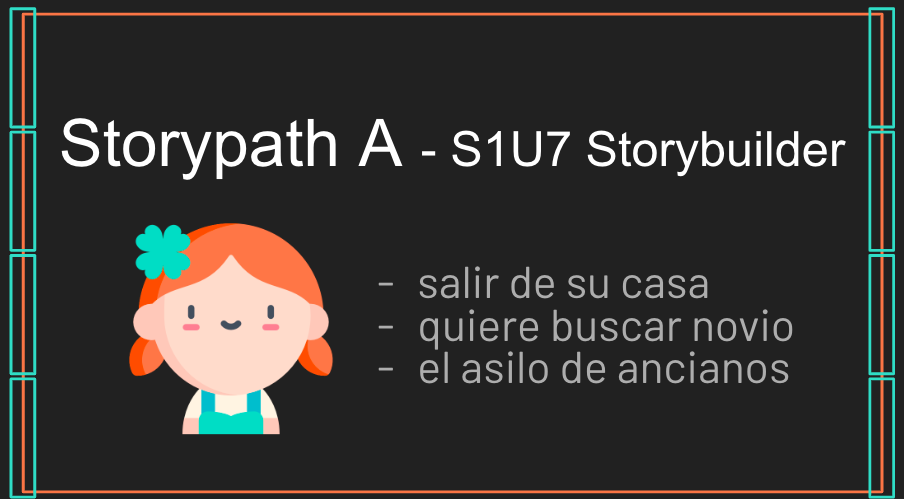
Last school year I tried a new game with the students that was linked to the Storybuilder the Comprehensible Classroom from SOMOS 1 Unit 7, Canela y su abuela. The object is for students to read the story, following the story path that I have chosen, and then work together to answer questions about the story.

These are the steps:

1. Give your students access to the storybuilder. I link it to the class Schoology page so they can read it, but not make any changes to the google slide presentation.

2. Give students the Story Path that they need to follow. (If you're unfamiliar with Storybuilders, they are similar to choose your own adventure books. The students read the story and after a few slides they are presented with a choice. They continue to read and make choices to which direction the story goes until it comes to a logical, or illogical, end. Then the slide returns them to the beginning of the story and they create a new story by making different choices throughout the story.)

3. Put students in groups of 3 or 4 and have them read the story following the story path that you have designated.

4. After reading, students close their computer. Each student needs a mini-whiteboard, a marker, and an eraser.

5. Project the first question on the board that relates to the story and story path they just read. The students quietly discuss the answer in their groups and then EACH STUDENT has to write the answer on their mini-whiteboard. It is NOT a race, but rather you want the students to take the time to write their answer and check the answers of the other members of their group.

6. Students hold up their mini-whiteboards. Project the slide with the answer. The group earns 1 point if each member of their group answered the question correctly.

I mix up the questions so there are cierto/falso questions, short answer questions, translations, and fill in the blanks.

These are a few of the benefits of this activity:


Click on the link to see/access my google slide presentation for this Storybuilder. 

Please note: I have expressed written consent from Martina Bex at the Comprehensible Classroom to share this activity with information related to the story from the Storybuilder.


Monday, December 20, 2021

The 'Simple, Almost Zero Prep, Get Me to Christmas Break' Game


Time's a wasting - no time for blah blah blah to introduce the post! 

Here are the directions for a 1% Prep Game for those still working this week before Christmas break!

Teacher Prep:
1. Think of a category - I chose Christmas items.
2. Write a list of 5-10 words related to the list. 

Materials Needed: teacher's list of 5-10 words, mini-white boards, markers, erasers (or whatever you use instead of mini-white boards).

Object of the Game: To earn the most points by writing answers that will match the answers of many other people in the game.

Game:
1. Give each student a mini-white board, marker, and eraser.
2. Have students sit in a large circle (reason for this - so they can NOT easily see the answers of those around them).
3. The teacher says the first word on the list (mine was "árbol de Navidad"). 
4. Students write one word (One item/color/adjective, etc. It could be more than one word, i.e. bathing suit in Spanish is traje de baño - 3 words but it is one object).
5. Allow time for students to write an answer IN THE TARGET LANGUAGE. Countdown from 10-1 and everyone holds us their answer.
If seated in a circle, it is easy for all students to see everyone's answers when they reveal their answers.
6. Students earn one point for each time their word is written but only if at least one other person matches their word.

Example A: you write luces and 2 other people write luces, each person that wrote luces earns 3 points, because a total of 3 people wrote the answer.

Example B: you write decoraciones and nobody else writes that; you get ZERO points.


Suggestions/Considerations:

1) Students can only write words IN THE TARGET ANSWERS. If they don't know the word in the TL that they want to write, they have to think of another one. They can't ask the teacher or other students for help!

2) I told students that they could NOT use any of the words I used in each round in subsequent rounds. In my example, they could not use árbol or Navidad in their answers for the first round or any other rounds.

3) No use of proper nouns

4) Keep the game short or they will figure out a way to ruin it - most likely. Example, one student might blurt out, let's only answer in colors, or let's always write "regalos". If that happens, shut it down (meaning tell students the game can't and won't be played that way) and, if needed, end the game!

5) Include a few words in the game that don't have obvious answers.

Words I used: árbol de Navidad, Papá Noel, estrella, nieve, invierno, Rudolph, regalos, rojo, galletas, duende (Christmas tree, Santa Claus, star, snow, winter, Rudolph, gifts, red, cookies, elf).  

Wednesday, May 12, 2021

DECISIONES - A Strategic Game for the World Language Classroom


Here is an end of the school year, yes we made it through the crazy pandemic hybrid schedules game for you. It is a great way to review any type of text - a short story, legend, several chapters in a novel, news articles, - anything with enough text to be able to write 14 comprehension questions.

I test drove this new game with three classes and made changes after the first two classes to improve the game and rules. Now, it is ready for you.  

Students will like the game because they decide what they will do with the points they earn, but it is mixed with an element of uncertainty. You'll like it because the students want to answer correctly in order to have that control over their points. So here you go...

DECISIONES

Materials Needed: 

- Deck of Cards. I use Spanish cards, Baraja Española. They're authentic, the face cards have the number values written on them. If you use a regular deck, I suggest taking out the face cards so keep it simple.

- Mini-White Boards, Markers, Erasers, or something for students to write their team's answers

- 14 Decisiones Cards (5 Regalen, 5 Quédense, 3 Dupliquen, and 1 Regalen los puntos negativos)

- 14 Questions for the game based on a text you have read with your students

Goal of the Game: Earn more points than the other teams

Instructions/Rules:

1. Put the students into three groups. If you have large classes, you can have 4 or 5 teams, but it will take longer to complete the game.  

2. Students need to sit with their teams to be able to discuss the answers to the questions. Give each group a set of the DECISIONES cards - 14 cards per set. Each team also should have 1 mini-white board, a marker, and eraser

*I copied each set in a different color to make it easier to keep track of the cards each team has used.

3. Read the first question. Team members will quietly discuss the answer and one team member will write the answer on the mini-white board. This is NOT a race. Allow sufficient time for students to discuss and write their answer.

4. Tell teams to hold up their answers. Teams that answer correctly will have the chance to earn points or to gift points. Teams that answer correctly will lose a DECISIONES card.

When Teams Answer Correctly:

5. If several or all teams answer correctly, start with the first team and pull a card from the top of the deck. Students look at the number on the card and decide which of the following actions they want to do:

- Quédense con los puntos - Keep the points, add it to their score

- Regalen los puntos - Gift the points to another team (They cannot gift it to their own team)

- Dupliquen los puntos - Duplicate the point value of the card, add it to their score

- Regalen los puntos negativos - The point value of the card is negative, gift it to another team to take aways points from that team's score

6. Keep track of each team's score and write it on the board on project the score so throughout the entire game, students can see the running scores for their team and other teams.

7. After the first team has decided what to do with the points, turn over a card for the net team that answered correctly. They decide what to do with their points. Continue until you have pulled a card for all teams that answered correctly .

If a Team Answers Incorrectly:

8. If a team answers incorrectly, they will lose cards. The first card they need to surrender to the teacher is the Quédense con los puntos card. If they answer incorrectly the second time, take away another Quédense card from the team. Continue taking away the Quédense cards until they do not have any more of those, then take away the Regalen los puntos negativos card, and then the Dupliquen cards.

The End of the Game:

9. The game ends AFTER students answer ALL of the 14 questions, and have no DECISIONES cards remaining.

A basic version of the DECISIONES cards are available HERE for download. It will ask you to make a copy.

Suggestions/Insights:

- The game works best when there are more than two teams playing. The reason for this is that when three teams play, and if one team starts to pull ahead, the other teams will most likely gift their points to the team with the lower points. This naturally helps to keep the scores close and teams won't give up and stop trying to win.

- Make the majority of the questions that students will know the answers. The best part of the game is students strategizing what to do with the points they are presented with. Throw in a few harder level questions to keep everyone on their toes and to encourage collaboration with their teammates.

- Students will quickly learn that they want to duplicate the cards with high numbers and gift the cards with the low numbers.

- If a team has used all of their cards and only have the Regalen los puntos cards remaining, you may want to add a rule that if they answer incorrectly, they lose X number of points. The reason I say that is because today one team had only Regalen los puntos cards remaining and I heard one of them say, "If we answer incorrectly, we don't have to give any points to other teams". Of course students will figure out every angle to their advantage. But, I'm telling YOU ABOUT IT, so you can add that extra rule to prevent that from happening. 

- When pulling a card off the top of the deck for the teams that answered correctly, I always started with the same team and went in the same order. It made it easy to follow the same order and NONE of the teams complained about it.

- Another plus to this game, you have to read a text with your students first! We all know the power of reading when helping your students to acquire another language!

Monday, February 1, 2021

Jamboard in the WL Classroom


I was late to the Jamboard party but thanks to my colleague, Krista K., for talking about how she uses Jamboard with her French students and for giving me a brief overview of how to use Jamboard.

Fast forward a few short months, and now I am working on a grad class project related to using Jamboard in the WL classroom. After spending a lot of time creating Jams to share for the training that I'm creating, the thought occurred to me to share the Jams on this blog for others to use and/or edit for their own classrooms. The examples may give you inspiration to join the Jamboard band wagon and even to create activities that aren't mentioned here.

If you have never used Jamboard before, there is a really basic video, made in October 2020 so it has most of the Jamboard updates. (Skip videos older than spring 2020 because there have been updates that they won't mention.) Click HERE to watch the video by Teacher's Tech.

My Jams (what each of the files are called on Jamboard) are sorted into 4 categories, although several overlap, as you will see below. When you click on the HERE that will take you to the Jams, it will ask you to make a copy. Then you can make whatever changes you desire! Best of all, THEY ARE FREE!!!

1) Interactive Games on Jamboard - access the copy HERE


2) Novel Activities and other Texts (several from Fiesta Fatal - added with written consent by the author, Mira Canion). access the copy HERE.


3) Check IN & EXIT Tickets - access the copy HERE


4) Collaboration & Reaction Sentences - access the copy HERE


I will be adding to the Jams throughout this semester, so if you download a copy early in 2021, you can check later to see the new activities that are included. There are several ideas I want to add, but I need to complete some other tasks awaiting me at the moment. :-) 

On a final note, making activities to upload as backgrounds on Jamboard is easy, especially for those that are accustomed to creating activities on Google Slides.  Or, if you have a Canvas account, search for online whiteboards and you'll find at least 50 templates to get your started. I imagine there are many Jamboard templates on sites for sale, but creating activities are EASY PEASY to make and it really doesn't take much time. Plus, then you can share them with others! Many people share their templates FREE so use those and then, when you are inspired and ideas come flooding into mind, make your OWN and share yours! 

Thursday, October 15, 2020

Flip the Script - A New Game for the WL Classroom


It's a good day when you create a new game and it goes over well with each class that you play it. I created and played FLIP THE SCRIPT with three of my Spanish 2 classes today and since it worked so well I wanted to share it with others.

I'm preparing my students to read "El escape cubano" by Mira Canion, which will be their first novel that they read this year. Before we read this novel, I usually tell a story that I wrote about a bride and groom that encounter a problem when they go to their wedding reception. The goal is to provide a "boatload" of comprehensible input for the words se escapa and se queda, which are words found in the first few chapters.  

FLIP THE SCRIPT explanation

1. You need a story script in which the students are familiar.

The story I used is titled: La novia se queda en el ascensor. I've read the story with my students and they participated in other writing and listening tasks using the same story script before playing FLIP THE SCRIPT.

2. Choose words/phrases in the text for students to translate from English to the TL and change those words to another color.  Assign point values to the words/phrases with higher point values for the more challenging words/phrases. 

Notice in the photo below, that some words are worth 1 point. The one point words are those that are used elsewhere in the text; the two points are ones that are not used in the text but I felt confident most teams would know them. There are some 3-point, 4-point, even a 6-point words.


3. Depending on your class size, tell students to form groups of 2-4. Three works best; 4 is probably too many because it makes it too easy for one of the group members to not participate.

4. Groups take turns. The first group chooses any word/phrases in parenthesis. They discuss the answer in their group, then one of the members writes the answer on a mini-whiteboard. If they are correct, they earn the points listed for that word/phrase. If they are wrong, their turn is over and the next group chooses a word to translate.

It is NOT a race. The teams take turns and that same rotation continues until all the words have been translated to Spanish.

The letters on the side are there so students identify the paragraph with the letter and then say which word they in English they translated to Spanish before showing me their whiteboard.

Advantages of FLIP THE SCRIPT:
- Students discussed the answers
- For many sentences the students had to read the full sentence to know WHO is doing the action
- Students stayed focused whether working on the word they chose or glancing at what other groups wrote
- There is strategy involved; there were some groups that were leading with points that chose a 1 point word of which they were sure instead of choosing one they were not sure of.
- No pressure - teams can earn points each time when choosing the easier words - slow and steady wins the race (as what happened in one of my classes today).

Disadvantage of FLIP THE SCRIPT:
- The students in school played the game while students at home did another assignment. I'm not sure how to include the students at home without them having the advantage of looking up the words. 


Sunday, October 20, 2019

10 Uses for Revista Literal: A FREE Spanish Resource

If you're a Spanish teacher and you haven't heard about Revista Literal yet, then I'm here to introduce you to this incredible resource.  Revista Literal is the brainchild of Martina Bex, a language curriculum specialist and also the founder of The Comprehensible Classroom, the SOMOS curriculum, Garbanzo language website, and creator/writer of endless resources on TeachersPayTeachers (not to mention a national presenter and keynote speaker.  I stated above, it is a FREE resource. According to the Revista Literal website, "Revista Literal is a monthly publication for beginning Spanish language learners written by Spanish language learners. Each month, readers submit short, original stories for publication." 

After students submit their stories, Martina invites native Spanish speakers to proof the stories and then she adds glossaries for the stories and volunteers add the English translations to the glossaries. After the stories are proofed and have glossaries, Martina places the stories in an online format, creates a title page listing the stories for the month, and adds graphics to the stories. She credits the writers of the stories using the students' first name and town and state, and credits the volunteer proofers and glossary writers. Then she publishes the stories online as a free resource for Spanish teachers. 

Then, voila, you have a free resource that comes to you each month to use with your students. Some of the stories are written in the present tense and others in the past.

Here are 10 ways to add the stories to your lesson plans.

1. Partner Reading. Students pair up with a partner and read the stories to each other for X number of minutes. This even works for your novice readers because of those beautiful glossaries for each story.

2. Extra Reading Resources. If you have students or parents asking what is available for a student that is struggling, or on the other end of the spectrum, a student that wants to continue learning beyond the classroom, tell them about Revista Literal. I download the resource (yes, you can download it if you prefer to read it on paper) and add it to our learning managagement system so it is always available to students.

3. Bell-ringer. Project a story from Revista Literal and ask comprehension questions for students to answer. Last week I projected the story "EL LABORATORIO" and alongside where it was projected I wrote the following questions for my Spanish 1 students to answer in English.

ANSWER IN ENGLISH:
1. Write 2 descriptions for Dave.
2. Write 3 facts about his job.
3. List 4 things about Karen.

Although I only asked for 2 descriptions for Dave, when I went over the answers with the class and a student responded with 2 of the descriptions, I asked what other descriptions were mentioned. I did the same with #2 and #2, Then we read the end of the story together.

4. Sub Plans! Use your imagination on how you can make your life easier when you need to be absent from work. Revista Literal will continue to provide comprehensible input to your students during your absence.

5. Running Dictation. Read Martina's explanation of Running Dictation here. If you want to put a new spin onto running dictation, use an online crossword puzzle creator and make a crossword puzzle of information from the story. You'll get double-whammy of reading out of the story because students read the story from Revista Literal (in the hall or wherever you have it posted) and then have to read the crossword clues at their "home base" in the classroom. 

6. Chronological Order. Pull some sentences out of the story that can easily conform to a timeline and have the students predict the order of the story. Obviously, do not read the story with the students before this. If you want to do this as a group, show (tape to the board) 2 of the sentences and ask students which one is first in the story, then add another sentence and students decide the placement of the third sentence. Add another and continue; students can change the order as new sentences are added and the story order becomes clearer (or they think it becomes clearer). 

7. Find It. Project the story, read it together with the students, then play Find It with flyswatters as explained here. 

8. Mosaic Story(a). Do this before reading the stories with the students. Pull sentences from 3 different stories from Revista Literal and list the sentences on one paper in random order. Write a brief description of each of the stories (brief!-brief!-brief!) in English (don't mention any of the characters in the story by their name in the story), and the students' task is to determine which sentences go with which story.

9. Mosaic Story (b). Again, do not read the story with the students before completing this task. Pull sentences from several stories and have the students create a story using the sentences. You could tell students they can omit X number of sentences and/or you can tell students to add sentences to make the story flow. The Mosaic Story (b) activity will provide your novice high and intermediate students an opportunity to create with the language.

10. Go crazy! Students use any sentences from the entire monthly issue to create a short story. Limit the students to 10 sentences or whatever number works best for you. Come to think of it, THIS would be a good emergency sub plan to have available when you need it. 

Obviously, since Revista Literal has stories, there are a boatload of possibilities. 

Thank you Martina for making teaching a bit easier.  ❤️


Tuesday, September 17, 2019

#89 - 101 Ways to Trick your Students into Reading

Students race to circle the Spanish word
Someday I will write a book titled, "101 Ways to Trick your Students into Reading the Same Text Again" or, at the least, submit a conference session proposal on it. I really don't have 88 other posts on this blog on this subject, but I'm willing to bet I have that many ideas that I've used in my Spanish classes in the last 19 years!

When I create activities or games, I tend to make ones in which students work with a partner or in groups of three to help keep all students engaged. But I changed it up a bit today.

First, I did a MovieTalk of a super short film clip, "El mejor de la clase", with my Spanish 1 students. The instructions and lesson plans are  from Martina Bex's (The Comprehensible Classroom) SOMOS 1 Unit 02 curriculum. In the curriculum Martina included a "basic script" of what happens in the video to guide teachers on how to do a MovieTalk. After completing the MovieTalk, I read the script to my students, while clarifying, sketching, gesturing and asking questions as I read the script.

Then I asked students to tell me 5 words that they still had a question about or were unsure of. Following that, I noticed the students needed some type of movement. I made an on-the-spot decision (what teacher doesn't do that on a regular basis?) to split the class into two groups and play a game similar to Find It. However, instead of working in small groups, I used the script that was projected on the board. I numbered the students so they could follow the order and keep the game moving (instead of deciding each round which student went next).

A student from each team went to the board with a marker in hand. I said the word in English and they had to read the text in order to find the Spanish word. When they found it, they had to circle the word before the other student did in order to earn a point for their team.

I kept it moving at a fast pace by not having them erase the circle they had drawn. Each student had several turns at the board and it took 6 minutes or less. It took the place of our 2nd Brain Break today because it had everyone up and moving around.

The beauty of using this particular script is that (1) it is comprehensible, of course, and (2) many words are used multiple times throughout the text. When I called out words that were used several times in the text, there was a greater possibility that students wouldn't try to circle the exact same word at the same time (helping to lesson the chances that it would turn into a contact sport).   

Tuesday, April 9, 2019

Countdown: A Listening Activity for the WL Classroom


Countdown is a listening activity/game in which students listen to 5 clues about the name of a person, or a word. The goal is to guess the word that is described by listening to the fewest amount of clues.

Countdown is an activity for students to sharpen their listening skills in L2 and to use some higher order thinking, as well as a bit of strategic play added in the mix.

My example below is how we played Countdown with names of women in my Spanish 4+ class. We played this at the beginning of our Mujeres Unit, but Countdown can be played with any category of words, or even words not in any specific category.

Preparation for the game

1. Students had to think of a woman that has had a positive impact in society and to NOT share the name with their classmates.  

2. Students had to write 5 sentences about the person, without mentioning her name in any of the sentences. The first sentence should be very vague; one that after listening to it their classmates may have an idea, but not be absolutely sure if they have the correct person.

The second clue should give a little more information about the person.
The third clue should allow the listeners to narrow down whom it might be.
and so forth for the fourth and fifth clue. By the fifth clue, EVERYONE should know the person that is being described.

(If you play this with a beginning level class, I suggest that the teacher write the clues.)

I gave #1 and #2 as a homework assignment because I did not want to take class time for the research and writing part of the activity.

3. Each student needs a marker board, a marker, and eraser. (You can use paper instead if you do not have mini-marker boards.) Students should sit in a large circle, facing inward, allowing for as much space as possible between each student to deter them from seeing what their neighbor has written.

Playing the game & scoring

Students will take turns reading their clues OR the teacher can collect the clues and read it to the students (which allows the teacher to make any needed corrections in the sentences on the spot, while reading).

1. Clue A (first clue), worth 5 points: Read Clue A in the TL. If a student thinks she knows the correct answer, she will write it on her marker board, hiding her answer so others cannot see what she wrote. She also writes #5 on the marker board because her written answer, if correct, is worth 5 points. (If students write the point value when they write their answer, it will be easy to tally the points at the end of the round.) 

She then puts the mini-marker board on the floor in front of her, face down. This makes it easy for the teacher and the students to see which students have written their response.

After a student, writes the name and places the board on the floor in front of her, she can NOT change her answer. If she writes the answer after listening to only one clue (Clue A) and when she hears the next clue (Clue B) she realizes that she has the wrong answer, she may NOT pick up the board and change her answer. This is where the strategic element comes into play.

2. Clue B (2nd clue), worth 4 points: Students listen to Clue B which gives a little more information about the woman. If a student knows the answer, she writes it on the marker board, along with #4 because it is worth 4 points if it is correct, and places the board face down in front of her chair.

This continues with Clue C (the 3rd clue - worth 3 points), Clue D (the 4th clue - worth 2 points), and Clue E (the 5th clue - worth 1 point).

3. After all clues have been read, the students will hold up their marker board and the teacher, or the student reading the clue, will share the correct answer. Students will keep track of their own points on their marker boards.

Example:  Below are the clues that I use as a model for the students. It is written in English below for the purpose of sharing it on my blog which is read by those who teach languages, not necessarily all Spanish teachers, but I read the clues in Spanish to my students. 

Clue A: Her father was a school teacher.
Clue B: She worked for the equality of education for girls from a young age.
Clue C: She published her autobiography when she was 16 years old.
Clue D: She is the youngest person to have received the Nobel Peace Prize.
Clue E: She is from Pakistan and was shot by the Taliban.

I have played this for several semesters. Some of the names that appear often are:
Rosa Parks
Ophra Winfrey
Frida Kahlo
Amelia Earhart
Helen Keller
Harriet Tubman
Hilary Clinton
Sally Ride
Serena Williams


You could play this game with cognates, foods, animals, occupations, or words not in any specific category. Playing with names of people was easy because the students didn't need to know the words in Spanish.  

Please let me know if there is anything unclear in the instructions that you would like me to clarify.

Saturday, November 24, 2018

"Risky Business" - A Game for World Language Classrooms

I enjoy playing games in my Spanish class to provide additional comprehensible input, and so do my students, but did you ever play a game with your students and one team was so far ahead in points that the other teams wanted to give up? If so, considering trying a new game I created called:

Actually, it is the scoring that is new.

My students and I had read a chapter in Vidas Impactantes, written by Kristy Placido, on Azucena Villaflor. While reading it, I realized that the information could be subdivided into the following sections:

  A. Azucena Villafor. (6)
  B. El golpe de estado (6)
  C. Néstor (4)
  D. La búsqueda (3)
  E. La primera manifestación (7)
  F. Gustavo Niño (6)
  G. Arrestado (5)
  H. La desaparición de Azucena (4)
  I. Justicia (5)

After dividing the chapter into the above 9 categories, I wrote questions (the # of questions is in parenthesis above) from that section. When we played the game, I listed the categories on the board, but I did not write the # of questions in each category. The students did not know how many questions were in each category.

The class is a small class so I divided the students into three teams; I will call the team A, B, & C in this explanation. Students on a team were permitted to discuss the questions with their team members.  The goal of the game is to have the most points after all the questions are answered or after the allotted time the teacher set for the game has ended.

Answering questions in a category:
Team A chooses a category and they have to answer the first question from that category. If they answer correctly, they earn 10 points. EVERY TIME a team starts their turn, in each round, the answer is worth 10 points. If a team answers the first question of their turn incorrectly, they do not earn the 10 points, nor do they lose any points. Their turn is over after an incorrect answer.

After Team A answers the first question correctly, they can chose to end their turn or continue with the second question in the SAME category.  If they answer correctly, they DOUBLE their score, (in the example below, they answered the first question correctly and earned 10 points; they answered the second question correctly and doubled their score to 20 points). After each question they answer correctly, they can choose to continue with the next question in the SAME category, or they can choose to end their turn. If they answer the third question correctly, their score is doubled from 20 points to 40 points.

Ending a turn
A team will end their turn in one of the following three ways:
- the team answers incorrectly
- the team chooses to end their turn
- there are no remaining questions in the category they choose (This is why I DO NOT write how many questions are in each category. I don't want team members to choose a category based on how many questions and possible points they can earn. This add some unknowns to the game.)

Losing Points
When a team answers the first question incorrectly, there are no changes to any of the teams scores. However, a team will LOSE points if they incorrectly answer any question after their first question in each round.  


In the example on the left, ALL teams start with 0 points:

Team A earned the following points in a first round: 

 10 pts - answered 1st question of a category correctly

 20 pts - answered the 2nd question in the SAME category and doubled their score (10x2=20) 

40 pts - answered 3rd question correctly in the SAME category and doubled their score (20x2=40) 

80 pts - answered the 4th question correctly in the SAME category and doubled their score (40x2=80)

40 pts - The team INCORRECTLY answered the 5th question. They LOSE half of their current points, (80➗2=40) and the 40 points they lose are divided by the number of other teams playing and added to the scores of the other teams.  (40 pts divided by 2 teams = 20 pts for Team A & 20 pts for Team B.

Score: Team A - 40 points; Team B - 20 points; Team C - 20 points

Team A's turn ends because they answered incorrectly. Team B starts their turn in the first round and chooses a category. If Team B knows the answer to the question that Team A answered incorrectly, they can choose to stay in the same category and answer that question. But as a reminder, they do not know how many questions are in that category. It is possible that the category only has 5 questions and after Team B answers the question correctly that Team A missed, and earns 10 points because it is the first question they answer correctly in their turn for that round, it may be the last question of the category and their turn would end. Team B can choose a different category instead of continuing with a question in the category that Team A answered questions.

Points will accumulate quickly when teams answer correctly and when they earn points from teams that lose half of their points.

      -------------------------------------------------------------------------


Team B starts their turn. They choose a new category:

20 pts - (their beginning score) points were added to their score when Team A answered incorrectly

30 pts - Team B answered the 1st question correctly (20 + 10 = 30). Remember, the first question that a team answers is ALWAYS worth 10 points; points double starting with the 2nd question they answer correctly.

60 pts - Team B answered the 2nd question correctly and doubled their score (30x2=60)

120 pts - Team B answered the 3rd question correctly and doubled their score (60x2=120)

240 pts - Team B answered the 4th question correctly and doubled their score (120x2=240)

Team B decides to end their turn (indicated by the small "x"). Their ending score is 240 pts.

      -------------------------------------------------------------------------


Team C starts their turn. They choose a different category. 

20 pts - (their beginning score) points were added to their score when Team A answered incorrectly

30 pts - Team C answered the 1st question correctly (20 + 10 = 30)

60 pts - Team C answered the 2nd question correctly and doubled their score (30x2=60

120 pts - Team C answered the 3rd question correctly and doubled their score (60x2=120)

240 pts - Team C answered the 4th question correctly and doubled their score (120x2=240)

480 pts - Team C answered the 5th question correctly and doubled their score (240x2=480)

240 pts - Team C incorrectly answered the 6th question. They lose half their points (480➗2=240)

The 240 points that Team C lost is divided by 2 (since there are 2 other teams playing) and Team A and Team B receive 120 points each.

 -------------------------------------------------------------------------

When my students were playing, there was one team that started to play cautiously because they had a large number of points and didn't want to RISK losing half of their points and having those points going to other teams. They chose to answer only 1 question per round. They were playing safe because the first question a team answers at the start of their turn in each round, is only valued at 10 points and if they answer incorrectly they don't lose points and the other teams do not receive any points for their incorrect answer.  

However, the one team was playing cautiously, but another team was answering several questions correctly each round before deciding to voluntarily end their turn, and the other team quickly caught up to the team playing cautiously.

Order of questions in each category
There are two ways you can order the questions in each category:

1. List them from easiest to most difficult. Teams will know that with each question, the difficulty increases so they can plan accordingly.

2. Order questions in each category in random order of difficulty. Teams will not know if the next question is easy-peasy or if it will be difficult and cause them to lose their points. If they proceed cautiously and end their turn, the next team may choose to continue in the category that the previous team answered one question correctly, and have several easy questions which will make the cautious team wish they had not ended their turn.

This game can be played with any written material/text or with text from a video or MovieTalk, as long as you are able to divide the information into many categories and there is enough material to write many questions.  I recommend a minimum of 6 categories and 20+ questions.  The advantage to having many categories is that if a team is on a roll, their turn will end as soon as they answer the last question in the category.

Whew! That was a long explanation. If there is something that is unclear, please ask me about it in the comments below and I will clarify it.  Thanks for reading!

Thanks to Carrie Toth - it wouldn't be Risky Business without you. 

Saturday, June 30, 2018

Brain Break - Photo Roulette

Photo Roulette - photo from Library of Congress
 It's June 30 today and I doubt there are many teachers looking for ideas for Brain Breaks but, when the school year starts again in August, this may come in handy. Also, I saw this today and I'm likely to forget about it, so this blog post serves as a reminder to me. 😃

For the brain break you will need to go to the website Photo Roulette, which has photos from the Library of Congress. The website will show you a photo from the Library of Congress and then you guess in what year the photo was taken. You have 10 guesses and after each guess it will tell you whether you should guess an early year or one that is more recent. 

You can play Photo Roulette as a whole class effort, let students work in groups of 4, or whatever works best that doesn't take time to arrange groups. If using it with the whole class, especially a beginning class, the teacher could have a student write a year on the board, and the teacher would then turn to the class and say in the target language, "Class, do you think it is before (year written on board) or after?"; maybe have the students that think it is before stand up and those that think it is a later date remain seated.  The teacher, or her helper, will type in the suggested date, and if the website says it was before, any of the students standing can write a number on the board for the next suggestion. For more repetition the teacher can say, in the TL, "It wasn't before 1955, it was after 1955." The teacher looks at those students that are seated and says, "Who wants to guess a date, an write it on the board, after 1955?" Doing the brain break in this manner allows the students to hear the year, repeated several times as the teacher asks about it, and not have to produce it.

A suggestion for doing the brain break with several groups: Divide the class in 4 groups and let the first group guess a year. Type the answer in and check if the group is correct. The next group reads the hint provided by the Photo Roulette website and guesses accordingly. The group that guesses correctly is awarded the number of points of the remaining guesses. After 3 or 4 photos, the group with the highest number of points is the winner.

If your school is 1:1, students can play Photo Roulette with a partner, which translates into ALL students being actively engaged!

Whether you use this website as a brain break or for a fun Friday activity, I think the students will enjoy it and not realize they're getting a little "practice" on how to say years in the TL. If the teacher wants to really dig in, she can compare the photo to today and point out things that are different, or simply talk about the photo after the year was guessed. 

If you have fun way to use this with your language class, please share in the comments below. HAVE FUN!!!!

Saturday, April 14, 2018

Button Button Brain Break from Sarah Breckley

When I was a little girl, I used to play "Button, Button, Who's Got the Button" with my sisters and my grandparents when we would spend a week at their farm in the summer. (fyi - the grammar in the title  of this old game may make you twitch; similar to PA's license plate motto "You've got a friend in Pennsylvania" - oh my.) It's been decades since I played or even thought about that game. But today, I saw a video by Sarah Breckley, a Spanish teacher from Wisconsin, (more about Sarah later), that brought those memories back in a snap.

Sarah's video title is "Button Button, Who's Got the Button - Direct Object Pronoun Grammar Game". In the video the students play the game with objects, which she varies in order to require students to use all of the direct object pronouns. Some suggestions for objects - coins, balls, pen, Beanie Baby stuffed animal.

The sweet deal about this game is that even though the title claims it is a grammar game, the focus is NOT on grammar. Rather, the focus is on guessing which of the students has the object that is being passed behind their backs. During play, the student that is seated in the middle tries to guess which student has the object by asking his classmates in the TL, "Do you have IT?" and the student that was asked answers "Yes, I have IT" or "No, I don't have IT" (or THEM if more than one object is passed).  

Converting BUTTON, BUTTON to a Brain Break
In Sarah's video, the students play this as a game. It can easily be shortened to be used as a brain break by playing without teams. Tell the students that you will play for X# of minutes, whatever length of time you want for your brain break, and end the activity at the end of the time.

Obviously, the first time you play, it will take longer because you will have to explain it to the students. After the first time, it can serve as an energizing brain break that takes place in the TL.


Button, Button, Who's Got the Button
Watch the video below or directly on YouTube HERE and then check the document below with Sarah's instructions on how to play. 


A pdf of the directions can be found HERE. 

Sarah Breckley
In 2017 Sarah was recognized as Wisconsin's Teacher of the Year. 
If you are a Spanish teacher that subscribes to Sr. Wooly's site, you may have recognized Sarah from his video "Feo" in which she absolutely nailed her role as Feona.

Sarah has a Vlog HERE, or in the future you can find it on the right panel of my blog on the list of CI/TPRS blogs. On her vlog you can find videos of Sarah teaching using stories through the use of comprehensible input with her students. When watching the videos, it is evident why she was award the Wisconsin Teacher of the Year title and obvious that her students are enjoying acquiring the Spanish language in her classroom. I encourage you to spend time watching her videos and then to "steal" more ideas from Sarah.  :-)